Capacity partners are looking harder at how MGA programs are built. MGAs, meanwhile, are working to stay attractive to the capital that supports them.
A good loss ratio helps. But capacity partners are also backing the risks an MGA will write next.
And those risks may look very different as the book grows, market conditions change, and new fleets enter the program.
They need confidence that the MGA can keep selecting and managing those risks well. For commercial auto MGAs, telematics can make a real difference here.
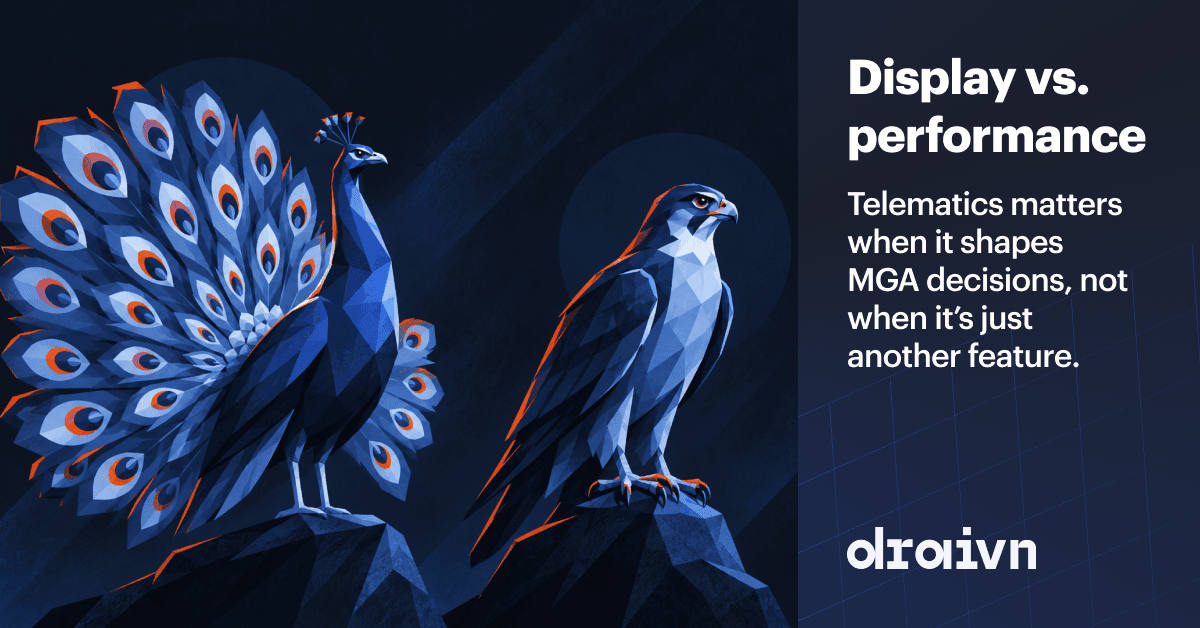
But simply adding telematics to a program does not make it “telematics-driven.”
Telematics has to be part of the insurance process
An MGA can add telematics to an existing program, but leave most of the underwriting process unchanged.
Some use telematics only for loss control post-bind. Others bring it in selectively when they need more evidence to assess a borderline risk.
Those uses have value, but there’s a bigger opportunity on the table.
Imagine using the same fleet data throughout the policy lifecycle.
Before bind, MGAs can validate exposure and better understand the risk it selects and prices.
After bind, they can track how that risk changes – vehicles come and go, mileage shifts, operating territories change, utilization varies.
By renewal, the MGA has a history of how the fleet actually operated throughout the policy term.
Now telematics informs how the MGA underwrites and manages its book, consistently and over time.
Making that work is harder than it sounds
Fleet data comes from different telematics providers, each with its own formats, definitions, and data quality.
Someone has to connect those systems, normalize and validate the data, make it usable for insurance, and deliver it at the point of decision-making.
For an MGA, building all of that internally means taking on a substantial IT project.
Draivn provides that infrastructure.
We connect to fleet telematics providers, turn fragmented data into validated exposure and risk characteristics, and make the information available within existing workflows.
The same view can then support underwriting, portfolio management, with additional applications in servicing and claims. MGAs can start without rebuilding their core systems and expand as the program develops.
Give capacity partners a program they can evaluate
A capacity partner does not get much confidence from hearing that a program “uses telematics.” The obvious follow-up would be how it changes the program.
An MGA can make a stronger case when it shows how they use validated exposure to select risks, monitor material changes post-bind, and how the book develops over time.
Capacity partners can then evaluate the approach behind the results, including how the MGA selects and manages risks as conditions change. That gives them more reason to believe the program can keep performing as it grows.
Draivn gives commercial auto MGAs the technology to build telematics into their programs and make a stronger case for long-term capacity support – without turning it into a major IT project.
Learn more at draivn.com.