
Straight to the conversation no one in the commercial auto industry wants to have, but that's what’s happening when we are silent.
Insurance rates are climbing, and there’s no sign of them slowing down. In commercial auto, insurance premiums saw the biggest jump across all insurance lines, with rates rising between 9% and 9.8% in the first two quarters of 2024 alone and 3% in Q1 2025.
Despite those price hikes, the commercial fleet insurance sector remains unprofitable. In 2024, a combined ratio hit 107.2, meaning insurers paid out more in claims than they earned in premiums.
Everyone feels the pressure.
- Fleets struggle to secure adequate coverage at a price they can afford.
- Brokers face difficult conversations with clients about rising costs.
- Insurers must balance competitiveness with profitability – a task easier said than done.
So, what’s driving this cycle? And more importantly, is there a way out?
Understanding the causes of rising premiums
The fundamental problem is clear: premiums are rising because insurers are unprofitable, and unprofitability is driven by systemic issues that go beyond any individual fleet's control.
- Social inflation & nuclear verdicts: Juries are awarding historically large settlements in accident cases, leading to "nuclear verdicts". In 2023 alone, these verdicts totalled $31.1 billion, with commercial auto accounting for 23.2% of them. Insurers have to price the risk of these massive payouts into every policy.
- Claims frequency & severity: Both metrics are rising. Driver shortages are putting more inexperienced operators on the road, while the rising complexity of modern vehicles, packed with advanced technology (factory-installed and third-party), makes repairs significantly more expensive.
- Economic inflation: From spare parts and labor costs to rental expenses and medical treatments – every aspect of claim resolution becomes more expensive.
- Aggressive litigation trends: The legal environment has become more challenging, with plaintiff tactics driving up litigation costs and settlement demands. Third-party litigation is forecasted to exceed $30 billion in the U.S. in the coming years.
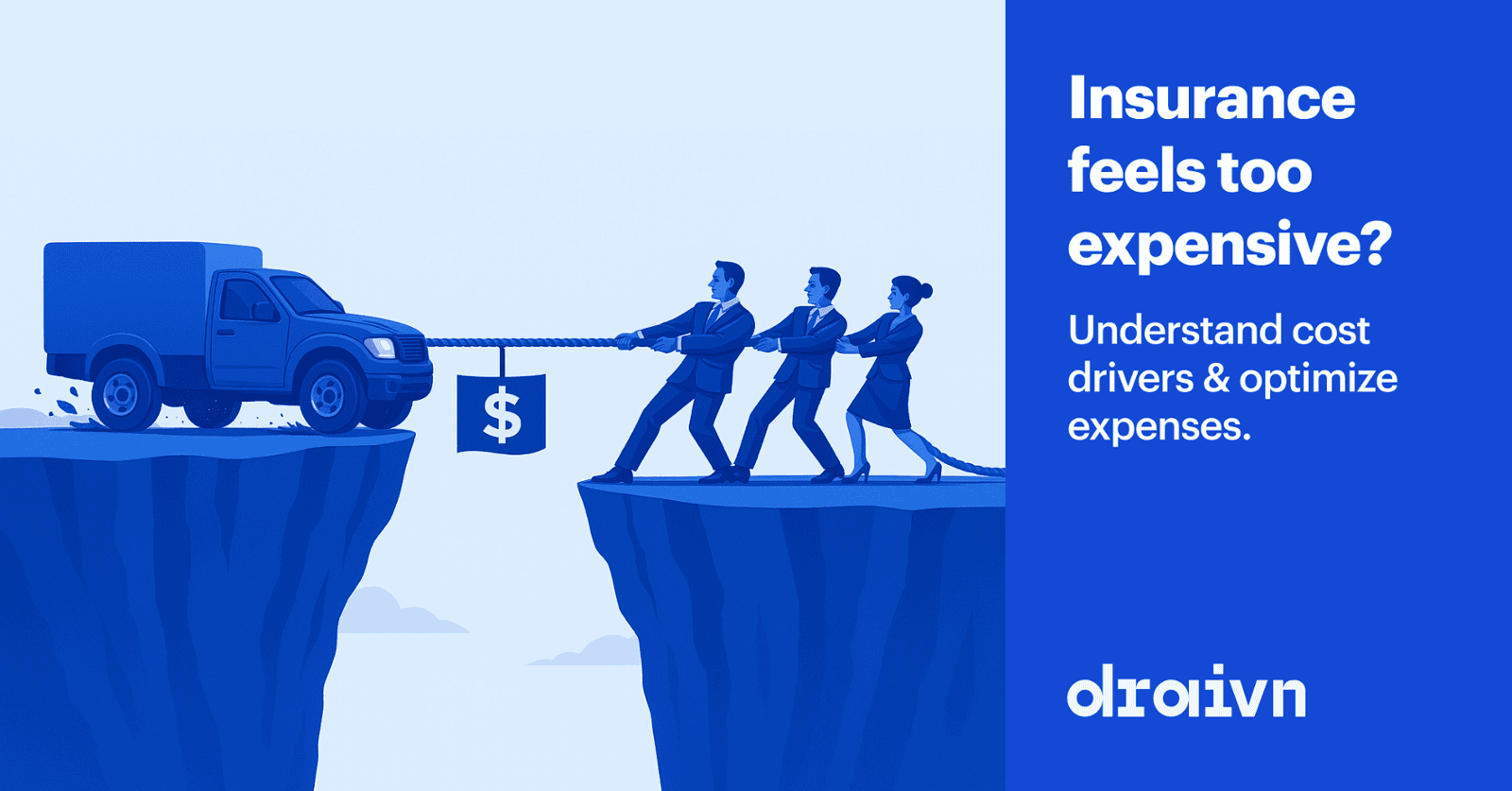
The problem is systemic – it's not about unsafe fleets or greedy insurers. It’s about the industry trying to restore profitability, while fleet operators fight to mitigate escalating expenses. Price increases alone can’t stop this tug-of-war. Systemic problems demand a systemic approach.
Good. Bad. Industry average
Here lies the fundamental unfairness – high-performing and improving fleets often pay the same rates as poor performers. This occurs because traditional underwriting still relies on limited, static data points – e.g., vehicle type, region, loss history, and broad industry classifications – rather than actual performance.
Without consistent, complete, timely, and accurate data, insurers can’t separate high-performing fleets from the rest. And everyone gets lumped into the same pricing pool, sinking into the industry averages.
Is there a way out? Yes, but this requires more than just claiming to be safe; fleets need to prove they are safe.
Use a documented, dynamic, data-backed risk profile as a life tube. And it is not just protection, it is leverage. When fleets use data to clearly demonstrate their low-risk profile, they negotiate pricing from a position of strength, instead of blindly accepting industry-average pricing.
Use this knowledge as a pricing pool ladder.
How a data-driven approach changes the game
The problem is three-sided – fleets, insurers, and brokers – and each side gains when real performance data enters the conversation.
The fleet’s advantage
Fleets should pay for their own risk profile, not the industry average. The solution is a dynamic, data-driven risk profile that reflects actual performance:
- Safety improvements become visible to the insurer and measurable.
- Safety investments become rewarded, as brokers legitimately negotiate better rates for their fleet customers.
- Insurance costs align more closely with actual risk, not assumptions.
The insurer’s advantage
For insurers, rate hikes are a short-term fix. A data-driven approach offers a more sustainable path to profitability:
- Precise underwriting and risk selection. Insurers can replace broad categorizations with individualized risk assessments and gain access to dynamic, forward-looking risk profiles for each fleet. This allows insurers to confidently secure the best risks and build a more profitable book of business.
- Customer loyalty and retention.Rewarding fleets that demonstrate a strong commitment to safety keeps customers on board. Safer fleets mean fewer claims, fewer legal cases, and reduced nuclear verdict exposure. So insurers no longer need to price these risks into every policy, and this allows them to offer competitive quotes without sacrificing profitability.
- Better claims outcomes. The first hours after an incident are critical. Immediate FNOL and access to comprehensive incident evidence can significantly reduce legal exposure and settlement costs.
The broker’s advantage
Data turns hard conversations into productive ones:
- When a fleet has a strong safety record, brokers can confidently negotiate better terms with insurers.
- When there’s room for improvement, brokers can clearly explain cost drivers and guide fleets toward becoming more insurable.
This shifts the broker’s role from policy seller to strategic risk advisor, helping clients decrease the number of incidents that lead to losses, making the entire ecosystem safer and more profitable.
Where Draivn comes into play
We can't change industry-wide price hikes overnight, but we can change the equation for individual fleets, brokers, and insurers – one data-driven partnership at a time.
- Are you a fleet manager or owner who wants to mitigate rising insurance costs with a proven safety record?
- Are you an insurer looking for more sustainable ways to achieve long-term profitability beyond rate increases?
- Are you an insurance broker who wants to transform difficult pricing conversations into strategic partnerships and better advocate for your clients?
In all cases, Draivn has something to offer. We simplify secure data sharing between fleets and their brokers/insurers through ONE API, making the most comprehensive and actionable fleet insights available across the commercial fleet insurance ecosystem.
As a result, Draivn transforms how commercial fleets demonstrate safety, how insurers assess and price risk, and how brokers advocate for their clients in this challenging market.
Don't just ask why insurance is expensive. Prove it shouldn't be. Learn how atdraivn.com.